


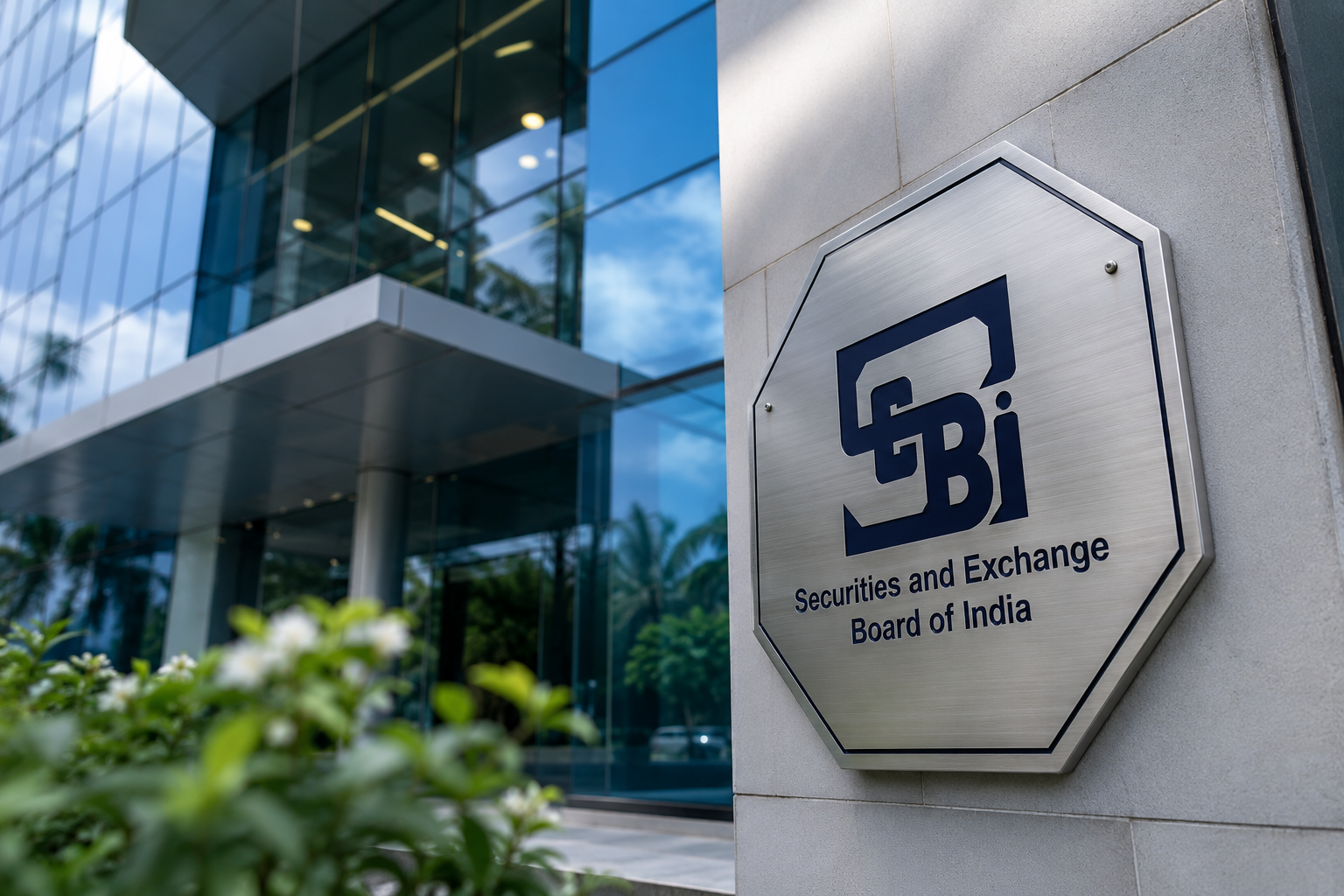
On 1 June 2026, SEBI’s SWAGAT-FI framework goes live, creating a single-window, automated registration and compliance system for trusted foreign investors in India. The framework, formally titled “Single Window Automatic and Generalised Access for Trusted Foreign Investors,” enables sovereign wealth funds, pension funds, central banks, regulated insurance companies and broad-based mutual funds to register as both FPIs and FVCIs through a single application, with operational approval within 48 hours and a 10-year compliance cycle. For economic development agencies, investment promotion organisations and foreign institutional investors, SWAGAT-FI represents the most significant simplification of India’s foreign investment framework in over a decade. T&A Consulting helps foreign investors and advisory organisations understand and leverage the new framework.
Introduction: Why SWAGAT-FI Matters
India has 11,913 registered Foreign Portfolio Investors (FPIs) as of June 2025, holding assets worth Rs 80.83 lakh crore (approximately $960 billion). SWAGAT-FI-eligible investors are estimated to contribute more than 70% of total FPI assets under custody. Despite this scale, India’s foreign investment framework has historically been criticised for procedural complexity: multiple registration processes across FPI and FVCI routes, repeated KYC and compliance documentation, short renewal cycles and fragmented regulatory interfaces.
SWAGAT-FI addresses these pain points comprehensively. By creating a unified registration mechanism, extending compliance timelines and reducing documentation requirements, it removes structural frictions that have made India less competitive than Singapore, Hong Kong and Dubai for institutional capital deployment. The framework does not change the substantive investment regulations — sectoral caps, ownership restrictions and FEMA compliance requirements remain — but it dramatically simplifies the administrative process of getting in and staying compliant.
Who Qualifies as a SWAGAT-FI Investor
SEBI has defined a specific class of “trusted” foreign investors based on their regulatory status, governance standards and risk profile:
- Government-owned investment vehicles including sovereign wealth funds and central bank reserve management entities.
- Pension funds regulated by their home jurisdiction’s prudential authority.
- Insurance companies regulated by globally recognised insurance supervisory authorities.
- Broad-based regulated public retail funds including mutual funds and exchange-traded funds registered and regulated in their home jurisdiction.
- Multilateral financial institutions such as IFC, ADB and EBRD.
- University endowments and charitable foundations meeting defined governance and regulatory criteria.
The common thread is that these entities are already subject to rigorous regulation, governance and disclosure requirements in their home jurisdictions. SEBI’s rationale is that requiring them to undergo the same level of scrutiny as less-regulated entities creates unnecessary friction without meaningful risk reduction.
Key Features of the Framework
- Unified registration. SWAGAT-FI-eligible investors can register simultaneously as both FPIs and FVCIs through a single application. This means a sovereign wealth fund can invest in listed equity (as an FPI) and unlisted startups (as an FVCI) without separate registration processes. Previously, dual registration required independent applications with separate documentation, compliance officers and fee payments.
- 48-hour operational approval. Eligible investors can obtain operational approval within 48 hours of application, compared to the weeks or months that standard registration can take.
- 10-year compliance cycle. Registration validity, KYC reviews and fee payments have been extended to a 10-year cycle, replacing the previous 3 to 5-year renewal requirements. This alone significantly reduces the administrative burden on large institutional investors managing India allocations.
- 100% NRI/OCI corpus contribution. SWAGAT-FI-eligible FPIs can have up to 100% of their corpus contributed by NRIs, Indian residents and Overseas Citizens of India, compared to the standard limit of 50% for other FPIs. This is particularly relevant for diaspora-focused investment vehicles.
- IFSC integration. The framework expands eligibility for FPI registration in International Financial Services Centres (IFSCs like GIFT City). Retail investment schemes managed by resident Indians operating from IFSCs can now register as FPIs, broadening the range of GIFT City-based vehicles that can access Indian markets.
- Reduced documentation. Eligible investors are exempt from certain procedural requirements that apply to standard registrations, including some documentation, disclosure and review obligations.
Strategic Implications for Foreign Investors
SWAGAT-FI changes the cost-benefit analysis for institutional investors considering India allocations. The reduction in compliance overhead, the 10-year renewal cycle and the unified registration make it significantly cheaper and faster to establish and maintain an India investment capability. For large institutional investors that manage allocations across dozens of markets, the administrative simplification is material.
The dual FPI-FVCI registration is particularly significant. India’s startup ecosystem has produced over 100 unicorns, and venture capital investment in Indian startups totalled over $10 billion in 2025. Institutional investors that previously accessed India only through listed markets can now build diversified portfolios spanning public equities, debt, venture capital and private equity through a single registration, managing their entire India exposure through one compliance framework.
The framework also interacts with other recent reforms, including the 100% FDI opening in insurance, the India-EU FTA provisions on financial services and the relaxation of Press Note 3 beneficial ownership thresholds. Together, these create a significantly more accessible investment environment for institutional capital.
Implications for Economic Development Agencies and IPAs
- Update investor advisory materials. EDAs and IPAs advising foreign investors on India should update their guidance to reflect SWAGAT-FI eligibility, benefits and application procedures.
- Re-engage institutional investors. Sovereign wealth funds, pension funds and insurance companies that previously cited compliance complexity as a barrier to India investment should be re-engaged with the simplified framework.
- Position India alongside competitor markets. SWAGAT-FI brings India’s institutional investor framework closer to the standards offered by Singapore, Hong Kong and Dubai. IPAs should incorporate this positioning into their investment attraction narratives.
- Leverage GIFT City integration. The expanded IFSC eligibility creates opportunities for GIFT City-based funds and vehicles to access Indian markets more efficiently.
How T&A Consulting Supports SWAGAT-FI Navigation
T&A Consulting provides advisory services for foreign institutional investors and organisations navigating India’s capital market access framework:
- Eligibility assessment. We determine whether an investor qualifies for SWAGAT-FI status and advise on the registration process.
- Registration facilitation. We manage the application process, including documentation preparation, liaison with designated depository participants and regulatory coordination.
- Investment strategy advisory. We advise on India allocation strategies, covering listed equity, debt, venture capital and private equity opportunities.
- Ongoing compliance support. We provide ongoing support for FEMA compliance, SEBI reporting and regulatory updates throughout the 10-year registration cycle.
- IPA and EDA advisory. We help investment promotion organisations incorporate SWAGAT-FI into their investor facilitation services and investment attraction campaigns.
SWAGAT-FI is more than a regulatory reform. It is a signal of India’s intent to compete seriously for global institutional capital. By removing the procedural friction that has historically disadvantaged India relative to Singapore, Hong Kong and Dubai, the framework creates a level playing field for the world’s largest and most sophisticated investors. The 1 June 2026 go-live date is not an abstract regulatory milestone — it is an operational starting point for a new era of institutional India investment.
Contact us at: pnijhawan@taglobalgroup.com to understand how SWAGAT-FI affects your India investment strategy.
Sources & references:
SEBI,
Maheshwari & Co,
Lawrbit,
CA Alley,
Elite Wealth